How Thrift Shops Can Use AI to Sell More
April 18, 2026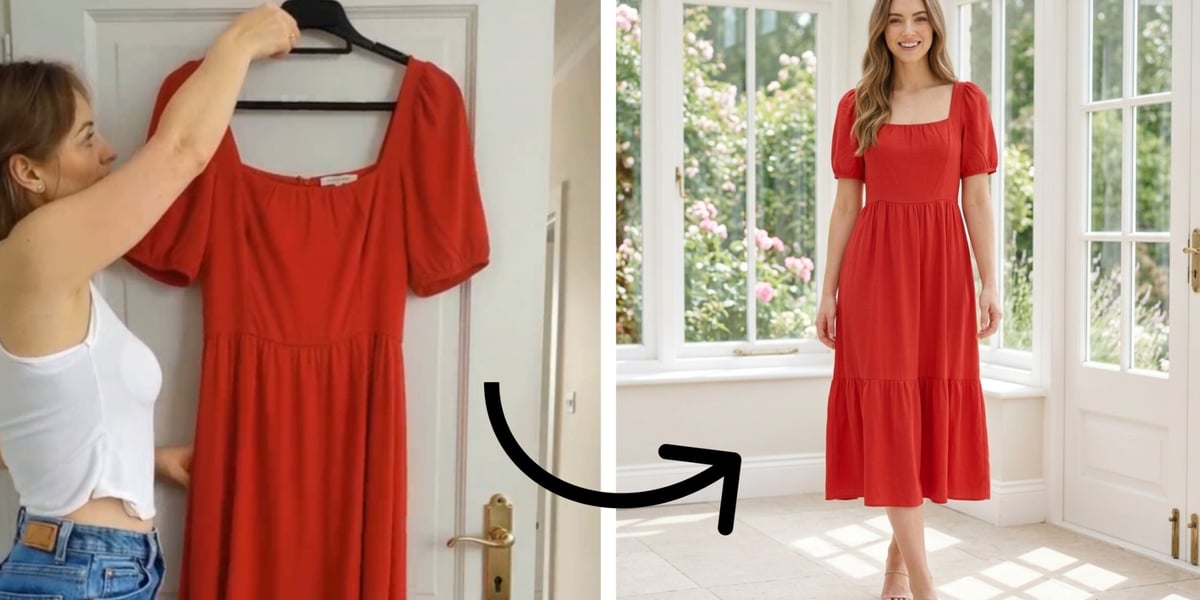
Thrift shops have a photo problem that fast fashion brands don't.
Every piece is unique. You can't reshoot the same stock next season. You can't reuse last month's campaign images. And you definitely can't afford a studio day for every haul that comes through the door.
One blazer, one pair of jeans, one vintage dress — each needs its own photo, on its own day, often the same afternoon you're trying to post it before someone else buys it.
This is exactly where AI for thrift shops earns its keep. The right tool turns a mannequin snap into a model photo in seconds. It keeps your Instagram feed looking like one shop instead of ten. And it cuts your per-listing cost from "studio hire" to the price of a cup of coffee.
Why thrift shops need model photos more than most
Fashion brands get to amortise a good photoshoot across hundreds of identical units. You sell one blue 90s windbreaker and that's it — the shoot is over the moment it ships.
That math forces thrift sellers into compromises shoppers can see. Flat lays make a $40 vintage piece look like a $4 bin find. Mannequin shots hide the drape of a dress. Mirror selfies cap what you can charge. And supplier photos from the bale are photos your competitors are using too.
Model photos fix all of this. Shoppers trust clothing more when they can see it on a body. They stay longer on the listing, and they're more likely to click buy.
The only question is how you get model photos without a model, a photographer, a studio, and a booking calendar. That's the AI answer.
Free vs paid: where Gemini and ChatGPT fit in
A lot of thrift sellers start with the free tools, so it's worth being honest about them.
Google's Gemini image model — nicknamed Nano Banana — is genuinely impressive. It handles character consistency, multi-image fusion, and natural-language edits like "put this jacket on the same model, now in a street-style scene." For one-off creative edits, it's one of the best free tools on the market.
ChatGPT's built-in image generation is similarly strong for ideation — mood boards, flyer concepts, a cute graphic for a Story.
The problem isn't quality. It's fit.
Every image on these tools is a fresh prompt, which means every listing is a negotiation. Describe the model. Describe the background. Describe the lighting. Regenerate three times until the garment details look right. Then do the whole thing again for the back view and hope the "minimal beige studio" in photo 7 matches photo 3. It usually doesn't.
Gemini has also tightened its restrictions around photorealistic people and outfit-swapping. For commercial thrift listings, you'll hit refusals you didn't expect.
Free general-purpose tools are great for one-off creative work. They aren't built for the thrift-shop rhythm — the kind where you photograph fifteen new items on Tuesday and need them live by Wednesday. That's the gap purpose-built tools like Relatable exist to close.
The workflow difference
On a general-purpose AI, each listing is a prompt-writing exercise. You describe what you want, regenerate until the details look right, then start over from a blank prompt for the next item.
Over a ten-item haul, that adds up to a lot of typing and a feed of photos that all kind of look related but clearly aren't the same shoot.
On a fashion-specific tool, you skip the prompt entirely. You pick a model from a gallery. You pick a background from a gallery. You get the photo in seconds. The next item uses the same model and the same background with two clicks. The one after that does the same.
By the end of the afternoon, you have a coherent drop, not a scrapbook. That's not faster by a little. It's faster by an order of magnitude once you're doing it every week.
Reusable models: the feature thrift shops underrate
If there's one feature worth optimising your setup around, it's reusable AI models.
Here's why it matters for a thrift shop specifically. Your inventory is chaos — every week it's different eras, different sizes, different vibes. The one thing shoppers can hold onto as "your shop" is the face and style of the model.
Reusing the same AI model across listings gives your feed a through-line that your actual stock can't.
Think of it like a shop owner who does their own modelling on Instagram — except you don't need to be on camera. Your model is always available, never has a bad-hair day, and can wear a men's XXL shirt one hour and a women's XS dress the next.
This matters even more if you're selling in the African market, where mitumba and second-hand boutiques are stacked with thousands of sellers on Instagram and WhatsApp. A consistent model — one your customers start to recognise — is one of the few things that makes your shop stand out in a crowded feed.
Relatable is built around this idea. You create a model once and reuse it across outfits and backgrounds, so your catalog develops a recognisable look without a brand shoot. The model selection is also diverse across skin tones and body types, so you can pick someone your actual customers relate to.
Gemini and ChatGPT can approximate this with careful prompting and reference images. But they'll drift over a run of 50 listings in ways that show on your grid.
Consistent backgrounds: the Instagram feed hack
Open the Instagram of any thrift shop that's doing well and you'll notice something: their background is consistent.
Maybe every photo is against the same brick wall. Maybe every photo is a clean beige studio. Maybe every photo is the same sunlit window corner. What you never see is one dress on a model in a park, one on a white cyclorama, and one on a busy street — all in the same row.
Background consistency is what makes nine random products feel like one curated feed. It's exactly where most thrift shops lose grip when they shoot in their actual space, because their actual space changes based on what's in the stockroom that day.
AI fixes this by letting you pick one background and hold it across every listing. On Relatable, you scroll a gallery of preset scenes — White Studio, Beige Toupe, Street Style, Sunlit Interior — and every item in your next drop uses the same one.
No prompt engineering. No "please match the last photo." No drift.
On a general-purpose AI, you'd need to paste an identical scene description into every single generation, and you'd still get slight variation in lighting, angle, and colour from one image to the next.
So, should thrift shops use AI?
The short answer is yes — the longer answer is with the right tool.
Free tools like Gemini and ChatGPT are extraordinary pieces of technology. If you're occasionally punching up a hero photo or making a graphic for a Story, they're more than enough.
But running a thrift shop means producing photos on a conveyor belt, every week, forever. The general tools aren't designed for that rhythm. You'll spend your time prompting, regenerating, and trying to remember what background you picked last Tuesday.
Purpose-built tools like Relatable collapse that workflow into a gallery, a click, and a download. Pay-as-you-go credits mean you only spend when you have stock to shoot. Local payment options like M-Pesa make it actually accessible for African sellers, not just shops with a US credit card.
Reusable models and consistent backgrounds mean your feed looks like a shop. And because the model is trained specifically on fashion, the garment details your buyers zoom in on stay accurate.
For thrift shops, that's the difference between AI being a fun experiment and AI being the reason your listings sell faster.