The Best AI Fashion Model Generators in 2026
June 30, 2026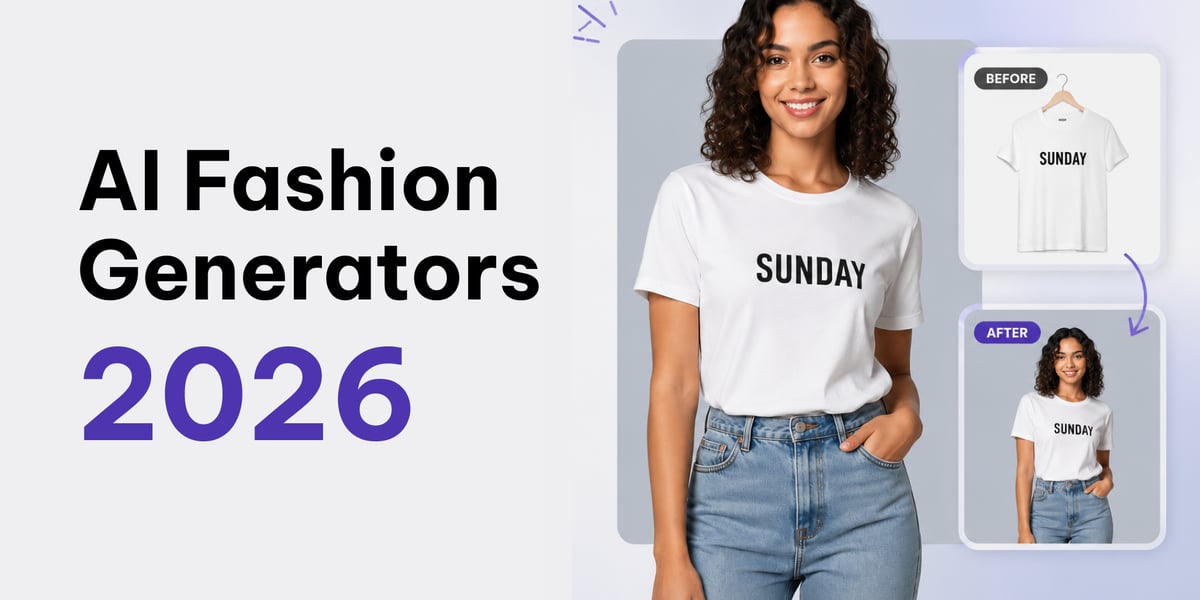
If you sell clothing online, you already know the problem. Every new item needs a photo. Every photo ideally shows the garment on a real person, not flat on a table. And traditional photoshoots (models, studios, scheduling, editing) are slow and expensive.
An AI fashion model generator solves this. You upload a photo of your clothing on a mannequin, hanger, or even a supplier image, and the tool generates a realistic photo of the garment worn by an AI model. No booking, no studio, no waiting.
But the tools are not all built for the same person. Some are made for developers. Some are made for one-off creative campaigns. And some are made for sellers who move a lot of stock and need fresh images every single week.
This guide compares the three AI fashion model generators that matter most in 2026, and helps you figure out which one actually fits how you work.
What to look for in an AI fashion model generator
Before the comparison, here are the things that actually matter day to day:
- Speed and volume. Can it handle 1 item or 1,000 without slowing you down? How long does a single image take?
- Your own models. Can you create models that belong to your store, or are you sharing the same faces as everyone else on the platform?
- Front and back views. Can you show the same garment from multiple angles with the same model?
- Pricing structure. Do you pay only when you have new stock, or are you locked into a monthly subscription whether you use it or not?
- Ease of use. Do you need to write prompts and learn the tool, or can you just point, pick, and go?
Keep these in mind as we go through each option.
1. Relatable
Best for: boutiques and fashion importers with a lot of stock who need fresh images frequently
Relatable is built for one specific job: getting model photos for your entire stock without slowing down. If you're a boutique owner or a fashion importer with a wide range of items and a steady flow of new arrivals, this is the tool designed around how you actually work.
The workflow is fast, and we mean fast. Snap a photo of your clothing on a mannequin or hanger, pick a model and a style, and get a finished photo in usually less than one minute. There's no prompt writing. You browse a gallery of preset styles and tap the one you want. When you're processing dozens of items a week, that speed is the whole difference.
It isn't only for clothing, either. Relatable works for accessories too, including hats, fascinators, bags, and more. And you can style the model however you like, choosing the look, the background, and the vibe that fits your brand.
What really sets Relatable apart is that it gives you your own models. You generate an AI model your customers can relate to, then reuse that same model across every outfit and accessory in your catalog. Your store gets a consistent, recognizable face that belongs to you, not a stock model shared with every other seller on the platform.
It also handles the messy reality of sourcing stock. Already have images from Alibaba, Shein, or AliExpress? Relatable converts those generic supplier photos into your own unique images for your local market.
You get accurate front and back views with the same model and background on both, so shoppers see the full garment. And because it works with 1 item or 1,000, it scales with your catalog instead of fighting it.
Pricing is where it fits the high-volume seller best. It's pay-as-you-go, with no subscription. You buy credits when you have new stock, and unused credits never expire. There's no monthly fee draining your account in a slow season. Sellers in Africa and other emerging markets can also pay with M-Pesa and other local payment methods, and there's an Android app on Google Play for generating photos straight from your phone.
Key highlights
- Generates a finished photo in usually less than one minute
- Built for your entire stock: works with 1 or 1,000 items
- Works for accessories too, including hats, fascinators, and bags
- Style the model however you like (look, background, and scene)
- Gives you your own models to reuse across your whole catalog
- Accurate front and back views with the same model and background
- Converts Alibaba, Shein, and AliExpress images into your own local-market photos
- No-prompt workflow: pick a style and model, get a photo in seconds
- Pay-as-you-go credits with no subscription, and credits never expire
- Accepts M-Pesa and other local payment methods
- Diverse models across ethnicities, body types (slim, curvy, plus size), and ages
- 360° video generation for Reels, TikTok, and ads
- Available on web and Google Play (Android)
2. Botika
Best for: established Shopify brands with a fixed budget
Botika is one of the most established names in AI fashion photography, and it does the core job well. It turns flat-lay, ghost mannequin, and packshot photos into on-model images, with a clean interface and native Shopify integration. For an established brand already deep in the Shopify ecosystem, it's a capable tool.
But there are a few things to weigh seriously before committing, especially if you're a high-volume seller.
First, it's slower per image. Botika typically takes around 7 minutes to generate a single item, compared to usually under one minute with Relatable. On one or two products that's fine. Across a full catalog of new arrivals, those minutes pile up into hours of waiting.
Second, it's subscription-based. Botika starts at $22 per month for the Lite plan, which includes 30 credits. Their Pro plan is $35 per month, and the Advanced plan is $230 per month for 200 credits. You pay every month whether you upload new stock or not. For a seller whose volume swings season to season, that's money leaving your account in the quiet months.
Third, it gets expensive at catalog scale. Each photo costs one credit, and the per-photo math adds up fast. Botika's Lite plan works out to roughly $0.73 per photo, and the Advanced plan to roughly $1.15 per photo. If you're launching a large catalog and every failed regeneration also burns a credit, a single seasonal run can climb into the hundreds of dollars.
There's also a model limitation worth calling out. Botika uses the same preset models for everyone on the platform, with no custom model creation. You can't build one model that becomes your store's signature face. So the same AI faces that appear in your shop may appear in a competitor's shop too. With Relatable, by contrast, the models are your own.
The takeaway: Botika is a solid, reliable tool if you have a predictable budget and only need the basics done well. But for sellers with high volume and a wide range of items, the slower speed, the subscription cost, the per-photo pricing, and the shared models make it a more expensive and less distinctive way to keep your catalog stocked.
Key highlights
- Established platform with native Shopify integration
- Turns flat-lay, ghost mannequin, and packshot photos into on-model images
- Diverse AI models across ethnicities, body types, and ages
- 8 free credits on signup to test it
- Slower generation: around 7 minutes per item
- Subscription required, from $22/month up to $230/month
- Per-photo cost of roughly $0.73 to $1.15 adds up quickly at catalog scale
- Uses the same preset models for everyone, with no custom model creation
3. Fashn AI
Best for: developers and brands building virtual try-on into their own apps
Fashn AI is a different kind of tool. While it offers product-to-model generation like the others, its real strength is virtual try-on technology and a developer-first approach. It's built for teams that want to embed AI fashion features directly into their own websites and apps.
The standout feature is letting a shopper upload their own photo and see how a garment looks on them, preserving body proportions and shape. Fashn also offers Model Swap, Product to Model, Model Creation, and best-in-class model consistency for keeping a face identical across shoots.
What makes Fashn notable is its API and developer tooling. It has a full REST API, Python and TypeScript SDKs, and is trusted by larger platforms and agencies for building try-on experiences. If you're technical and want to wire AI fashion into a custom product, this is a strong choice.
But that's also the catch for most sellers. Fashn is built around a developer and API workflow, not a simple point-and-click flow for a busy boutique owner. If you just want to upload a mannequin photo and get a model image without touching code, SDKs, or API credits, it's more tool than you need.
The conclusion here is about fit, not quality. Fashn AI is excellent if you're a developer or a brand building try-on into your own app. But if you're a seller who needs daily or weekly model photos for your stock, a guided, no-prompt tool will get you there faster.
Key highlights
- Industry-leading virtual try-on with body-proportion preservation
- Full developer toolkit: REST API, Python and TypeScript SDKs
- Multiple endpoints: product to model, model swap, model creation, video
- Best-in-class model consistency across shoots
- Free credits to start, with no card required
- Built for developers and API teams more than non-technical sellers
- iOS app available
Quick Comparison
| Feature | Relatable | Botika | Fashn AI |
|---|---|---|---|
| Best for | Boutiques & importers with high stock volume | Established Shopify brands | Developers & try-on builders |
| Speed per image | Usually under 1 minute | Around 7 minutes | Varies (API-based) |
| Workflow | No-prompt, point-and-pick | Preset poses, upload & select | API / developer-first |
| Your own models | ✅ Models that belong to your store | ❌ Same models shared by everyone | ✅ |
| Accessories (hats, bags, etc.) | ✅ | Limited | Limited |
| Style the model your way | ✅ | ❌ Presets only | ✅ (via prompts/SDK) |
| Front & back views | ✅ Same model & background | ❌ | ❌ |
| Convert supplier images | ✅ Alibaba, Shein, AliExpress | Limited | Limited |
| Pricing model | Pay-as-you-go (no subscription) | Subscription required | Subscription + API credits |
| Starting price | Pay-as-you-go, credits never expire | From $22/month | From ~$9/month + API usage |
| Local payments | ✅ M-Pesa & others | ❌ | ❌ |
| Virtual try-on | ❌ | ❌ | ✅ |
| Ease for non-technical sellers | Excellent | Good | Lower (developer-focused) |
So which one should you choose?
It comes down to who you are.
If you're a developer or a brand building try-on into your own app, go with Fashn AI. Its API and try-on engine are genuinely strong, and that's exactly what it's for.
If you're an established Shopify brand with a fixed budget and a settled, low-volume workflow, Botika is a reliable, well-known option. Just go in knowing it's slower per image, the subscription runs whether you use it or not, the per-photo cost climbs at scale, and the models are shared across every seller on the platform.
But if you're a boutique or a fashion importer with a lot of stock, with a wide range of items, new arrivals coming in regularly, and a need for fresh model photos every week, then Relatable is the best fit. It's built for exactly that situation: photos in under a minute, your own models to reuse for a consistent store look, support for accessories as well as clothing, full styling control, accurate front and back views, supplier-image conversion, and pay-as-you-go pricing so you only spend when you actually have new stock.
For high-volume sellers who live and breathe their catalog, that combination is hard to beat.
Try Relatable free. Your first product photo is on the house.